

The Candidate You’ve Been Passing On, Might Be Your Best Hire Yet.

There’s a standoff happening in the hiring market right now and chances are, you’re already feeling it on one side or the other.
On one side: employers with open roles, tightening budgets, and an ever-growing list of must-haves. On the other: candidates with real skills, hard-won experience, and expectations shaped by a labor market that promised them more. And in the middle? The work isn’t getting done.
The search for the “perfect” hire has become one of the most expensive, least talked-about problems in workforce management today. It’s quiet. It’s gradual. And by the time most organizations notice the real cost, it’s already compounded.
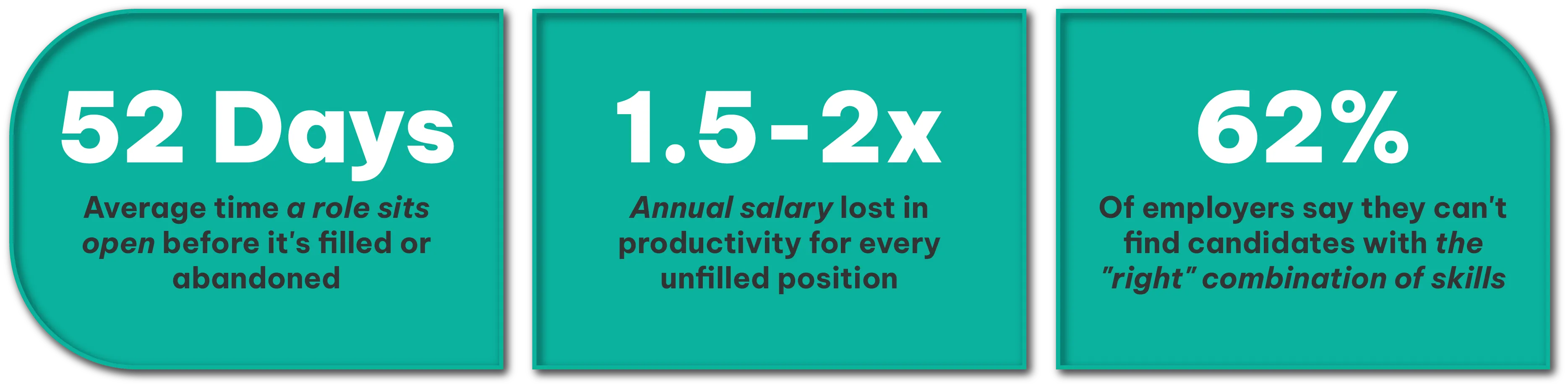
Sources: SHRM, LinkedIn Talent Trends, U.S. Bureau of Labor Statistics
Stop Waiting. The Role is Costing You More than You Think
The perfect hire, as most job postings describe them, doesn’t exist.
They have exactly five years of experience… not four, not seven. They know every software platform in your stack. They’re willing to commute, work flexible hours, grow into leadership, and accept a compensation package that made more sense three years ago. They’re enthusiastic but not demanding. Experienced but somehow still moldable.
Sound familiar? That profile isn’t a job description. It’s a wish list. And chasing it is costing you more than a few missed candidates.
Here’s what actually happens while organizations wait for the unicorn: Existing team members absorb the extra workload. Burnout ticks upward. Deadlines slip. Clients notice. The people you already have start wondering if they’re next to leave. And the role? It’s still open.
The Candidate Side of the Standoff
To be clear: this tension isn’t one-sided.
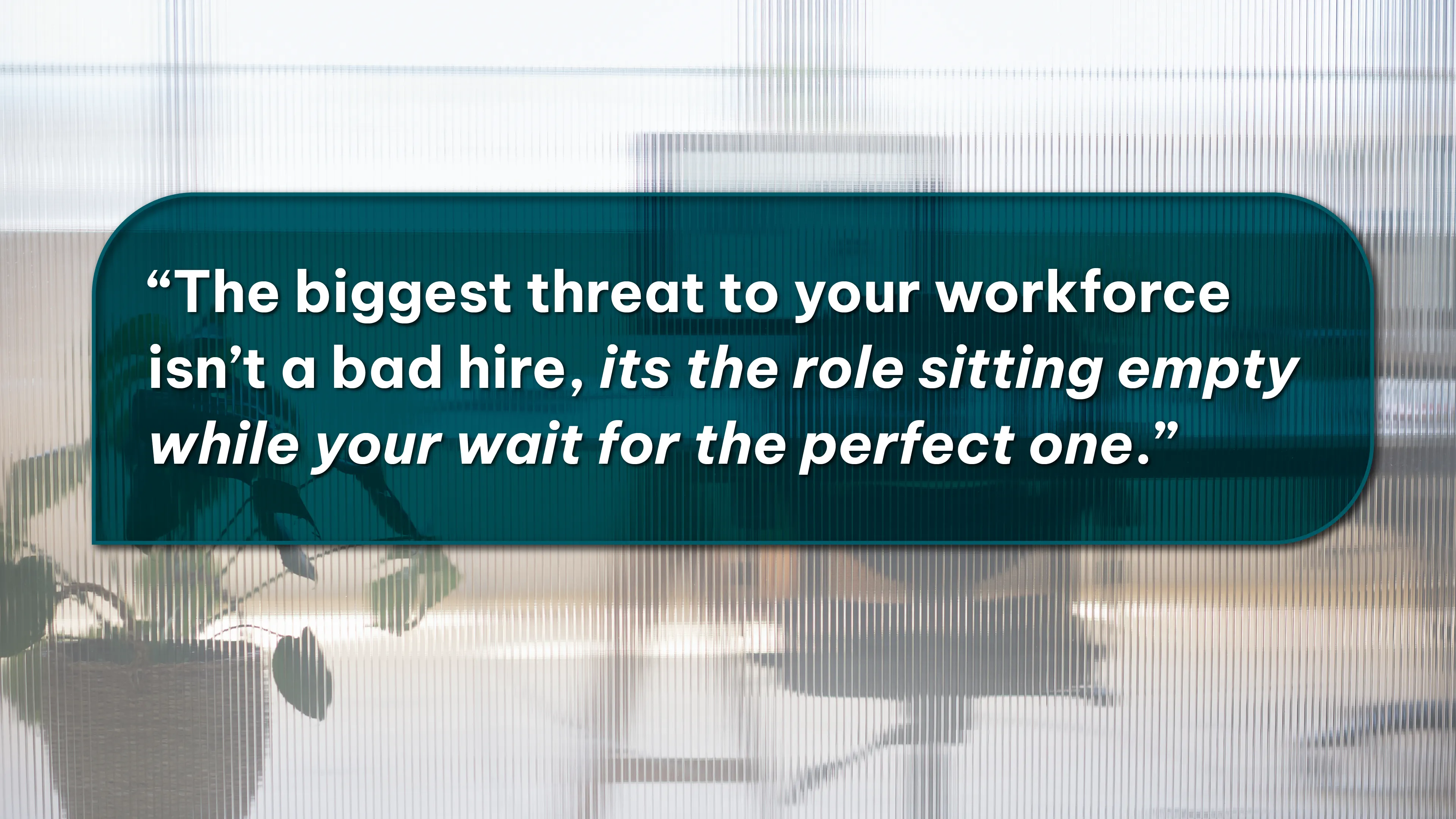
Candidates; especially in skilled trades, manufacturing, and mid-level professional roles; have been burned. They’ve watched companies post roles at below-market rates. They’ve been called overqualified when they had too much experience, and underqualified when they had the wrong job title. They’ve gone through four rounds of interviews only to be ghosted. They’ve accepted roles that promised flexibility and delivered something entirely different.
So they’ve drawn lines. They know what they need, what they won’t accept, and, increasingly, they have options. A candidate who walks away from your role isn’t being difficult. They’re being informed.
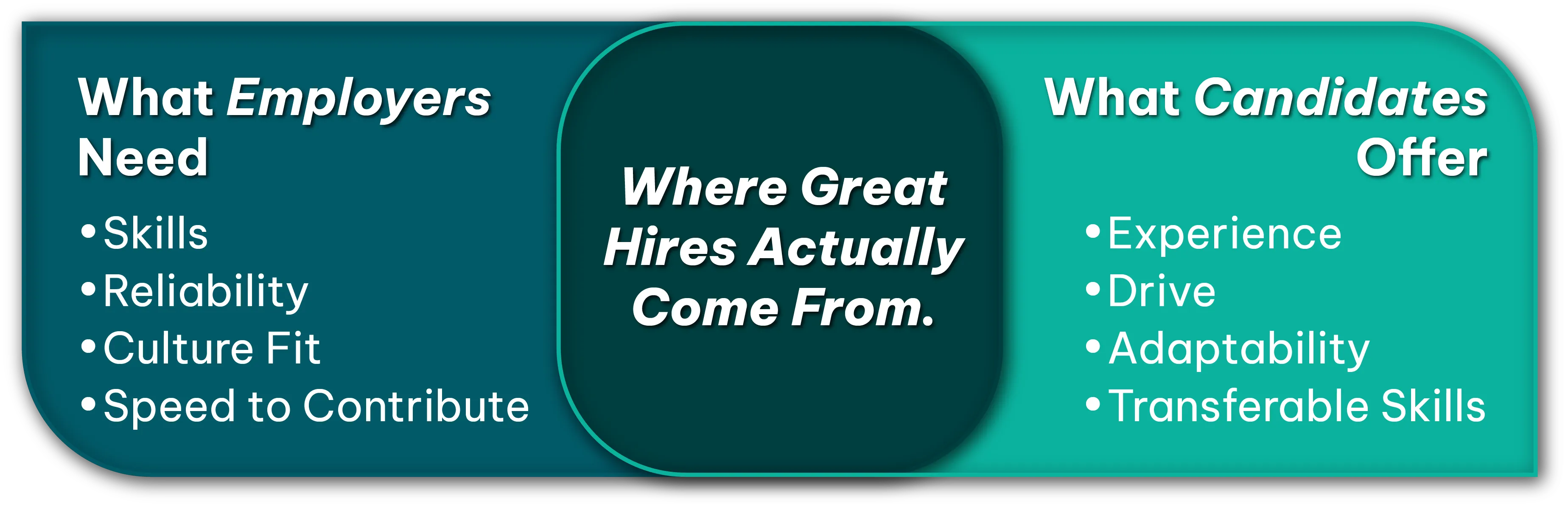
That’s the tension point: two parties who both have legitimate needs, both have real constraints, and both have stopped trusting that the other side will meet them halfway.
What “Almost Right” Actually Costs You
Let’s talk numbers, because the “we’ll wait for the right person” approach has a real price tag that rarely shows up in a single budget line.
The hidden cost of an unfilled role includes:
- Lost productivity: Your team carries the extra load. Output drops. Quality dips.
- Recruitment overhead: Job boards, screening time, interview hours… they add up with every failed search.
- Burnout tax: Overextended employees don’t stay. Turnover from stretched teams is a compounding cost.
- Revenue impact: Unfilled revenue-generating or client-facing roles have a direct line to your bottom line.
- Opportunity cost: Every week that role is empty is a week your competitor’s version isn’t.
And when a role is finally filled after a long search? The pressure to make it work, even when the fit isn’t quite right, often means organizations settle in ways they swore they wouldn’t. The result: another turnover cycle begins.
The pursuit of perfection doesn’t raise your hiring standard. It raises your hiring cost.
The Reframe: From Perfect to Right
So what’s the alternative? Not lowering your standards, redefining them.
The question isn’t “does this candidate check every box?” It’s “does this candidate have the foundation, the drive, and the adaptability to succeed here?” Those are very different questions. And they require a very different kind of assessment.
A candidate who has done similar work in a different industry often brings something more valuable than someone who’s done exactly this work before: fresh perspective, cross-functional thinking, and the hunger to prove themselves in new territory.
A candidate who’s missing one technical skill but has mastered every other aspect of the role will outperform a fully-credentialed hire who’s disengaged, every time.
This isn’t about settling. It’s about seeing more clearly.
Where Our Recruiting Comes In
This is exactly the problem we’ve built our practice around.
Our recruiters don’t just source candidates, they translate. They understand what an employer actually needs underneath what they’ve listed. They know how to hear what a candidate is really asking for beneath the compensation number they named. And they’re skilled at finding the alignment in that middle ground, the overlap that a job board algorithm will never surface.
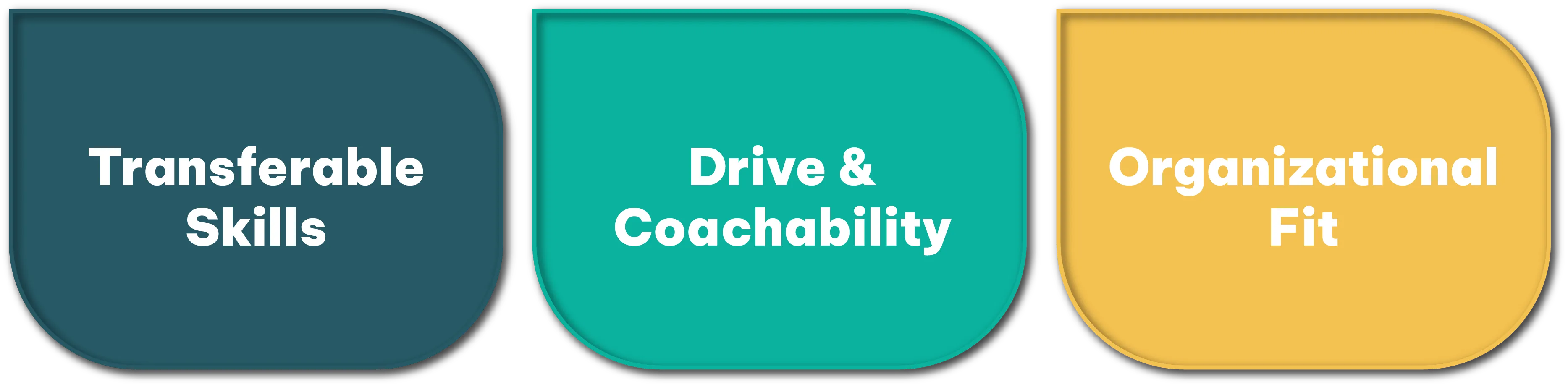
We assess for three things that predict long-term success far more accurately than a checklist ever could:
- Transferable skill depth — What a candidate has actually built, solved, and delivered. Regardless of the title it came under.
- Drive and coachability — The motivation to grow into a role, not just fill it. The mindset that makes training an investment, not a liability.
- Organizational fit — Not just culture, but communication style, pace, and the kind of environment where this person will genuinely thrive.
We’re honest brokers on both sides of the table. That means coaching candidates to present their experience more powerfully, and helping employers recognize what a strong candidate actually looks like when they’re standing right in front of them.

Ready to Build a Stronger Team Together?
Get in touch with us to learn how our staffing solutions can make a difference for your organization.
Let's Talk Staffing
Share This Post


All Rights Reserved © 2026 Staffing Inc. | Privacy Policy